Prosper
Research-led UX strategy and product design for a property lifecycle platform

Research-led UX strategy and product design for a property lifecycle platform
Prosper is a UAE-based property intelligence platform with the ambition to become an all-in-one solution for the entire property lifecycle. From search and verification to contracts, payments, and post-move-in management.
Prosper partnered with Digital of Things to support this transformation through research, strategy, and UX leadership. The engagement focused on grounding product decisions in real user behaviour, reducing friction across core journeys, and defining a scalable experience architecture for long-term growth.
Prosper was evolving from a listings-focused platform into a full property lifecycle product. To do this successfully, the team needed clarity around real user needs, trust barriers, and prioritisation.
Key challenges included:
Led a multi-stakeholder product and UX workshop
We facilitated a structured workshop with Prosper stakeholders to align on business goals, product ambition, and UX priorities. This ensured decisions were grounded in shared understanding rather than assumptions.
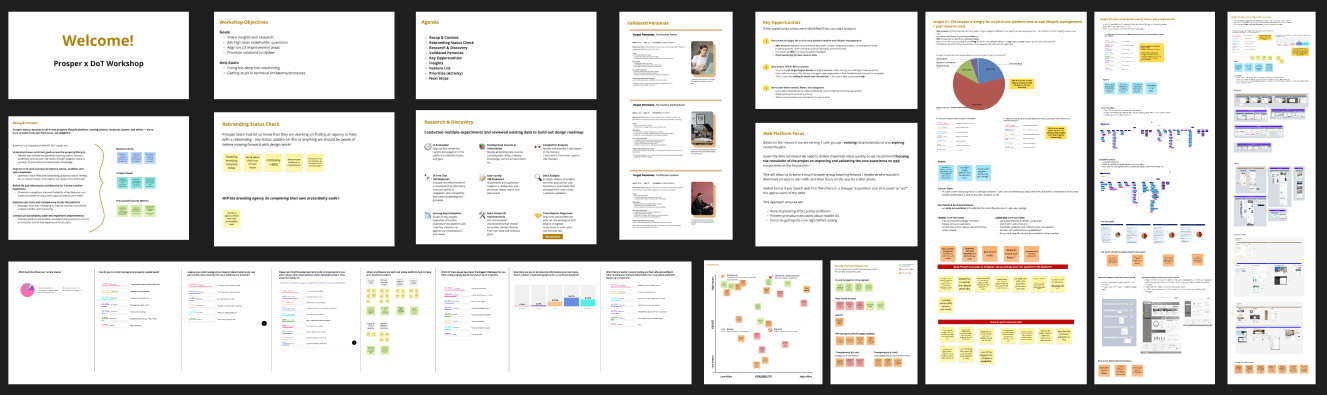
Conducted research and discovery at scale
We reviewed existing data and ran multiple research activities, including surveys, tree testing, and journey evaluations. This allowed us to identify friction points, validate assumptions, and uncover behavioural patterns across user groups.
Validated core personas and user segments
Research confirmed two primary audiences to focus on initially, existing tenants and landlords, and aspiring renters and buyers. Personas were refined based on real behaviours, needs, and trust concerns.
Identified key product insights and opportunities
Three major opportunity areas emerged:
Redefined information architecture and navigation
We evaluated and tested Prosper’s IA, identifying where users struggled and why. Based on results, we restructured navigation, consolidated dashboards, clarified calls to action, and defined a more intuitive task-based structure.
Created a prioritised UX roadmap
Insights were translated into a clear prioritisation framework, balancing value, feasibility, and effort. This helped Prosper focus on high-impact improvements such as navigation updates, trust indicators, verified listings, improved search filters, and clearer pricing transparency.
Defined a web-first platform strategy
Given time and acquisition constraints, we recommended focusing initial efforts on a responsive web experience. This allowed Prosper to reach a broader audience quickly, validate the core experience, and reduce duplication before expanding further into mobile.
The engagement gave Prosper a clear, research-backed product direction. Core assumptions were validated, trust emerged as a central design pillar, and the product roadmap shifted toward solving real, high-value user problems.
By grounding decisions in data and prioritisation rather than intuition, Prosper reduced risk, aligned stakeholders, and established a scalable foundation for future design and development.
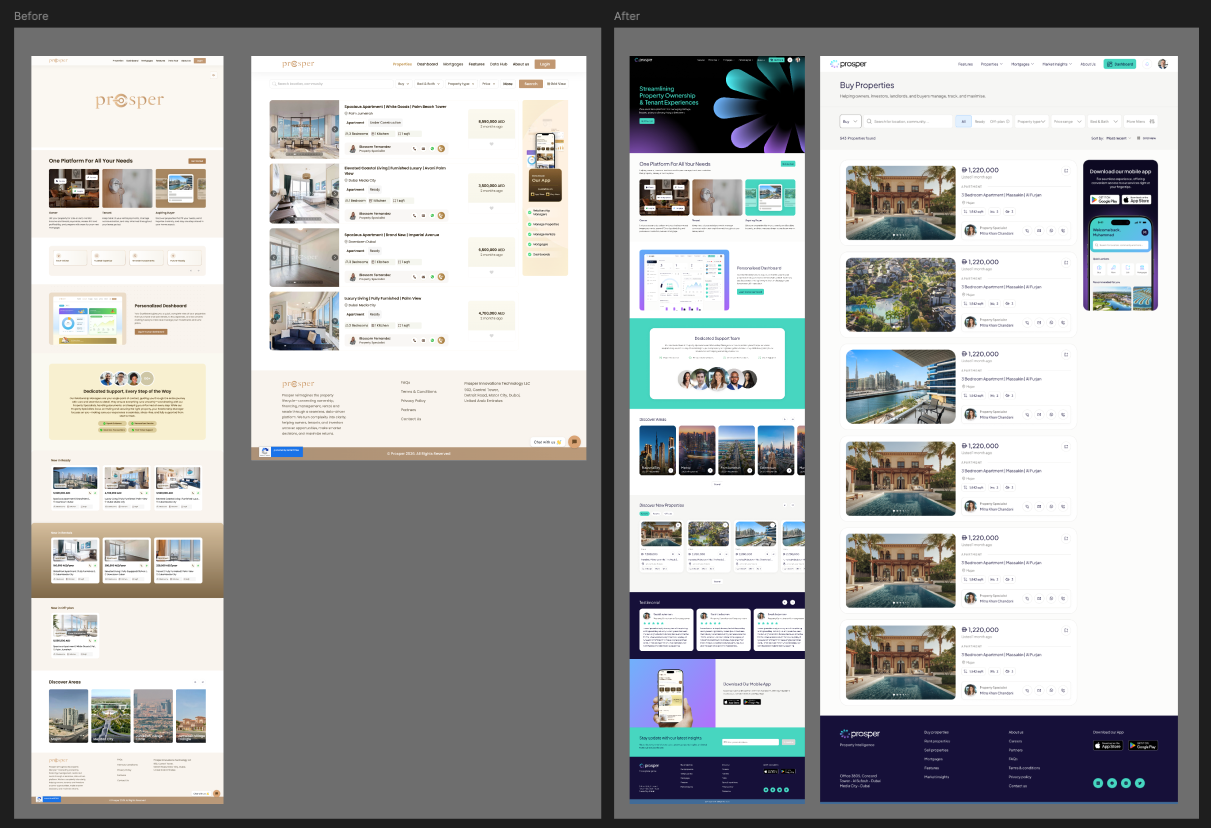
Outstanding UI/UX work! They designed our mobile app and dashboard UI with creativity and precision. Great communication, met every deadline, and truly understood our vision. Highly recommend! - Nitin from Prosper
 UAE: 1507, The Dome Tower, Cluster N, JLT, Dubai, UAE
© 2026 Digital of Things DMCC. All rights reserved | Privacy policy


