Curiosity is the competitive advantage in UX design

By
Digital of Things
Updated onJanuary 23, 2026


User experience (UX) is often treated as a process. Deliverables, screens, frameworks. But good UX does not start with tools or trends; it starts with curiosity. Having the willingness to question what already exists and to design for people as they are.
At Digital of Things, this mindset guides our approach across various industries and markets. Margarida’s path as a Senior UX/UI Designer demonstrates that the most impactful user experiences often stem from personal observation rather than digital trends.
Margarida holds a Bachelor's degree in Graphic Design and a Master’s diploma in Interaction Design. Her career began with an award-winning redesign of a medical leaflet. This project was born from curiosity and empathy after witnessing her grandmother’s struggle to read critical healthcare information. This early focus on accessibility and improving daily lives through practical design remains a cornerstone of her work.
After completing her thesis, Margarida joined Tangivel. She later transitioned to Hyphen, a company that was previously part of the Tangivel Group, and now occasionally travels to Dubai to collaborate with the Digital of Things team. Throughout her career, she has navigated complex technical challenges by applying a back to basics approach, favouring pen and paper wireframing and maintaining a strong awareness of cross-cultural context.
Curiosity is often described as something you either have or do not. In practice, it is a skill that must be deliberately exercised. Margarida’s background in interaction design trained her to question first solutions. To ask why a design exists in its current form and who it truly serves. This approach aligns closely with how we approach UX at DOT.
We do not design to validate assumptions; we design to challenge them. Research, conversations, and iteration are not phases to move through quickly. They are where the real design work happens.
In many projects, the instinct is to replace rather than improve. One of Margarida’s early projects challenged that thinking when she redesigned a medical leaflet. Not an app, not a platform, but a piece of paper that people rely on in moments of stress and vulnerability.
The problem was simple and serious: the information was unreadable for many users, especially elderly people.
This perspective matters. UX is not about adding digital technology where it is unnecessary; it is about removing friction where it causes harm. At DOT, we see this time and time again. The best outcomes often come from refining existing systems and designing with accessibility in mind.
Dubai represents constant diversity. Designing here requires more listening, understanding, and fewer assumptions. Language, terminology, expectations, and behaviour vary widely. What works in one context may confuse users in another. This is why our process prioritizes communication and validation over stereotypes or regional shortcuts.
Strong user experiences are the result of alignment, not handoffs. UX requires ongoing collaboration between researchers, designers, developers, and stakeholders. At DOT, UX does not end when screens are approved. Designers stay involved throughout the lifecycle to ensure the final product reflects the original intent.
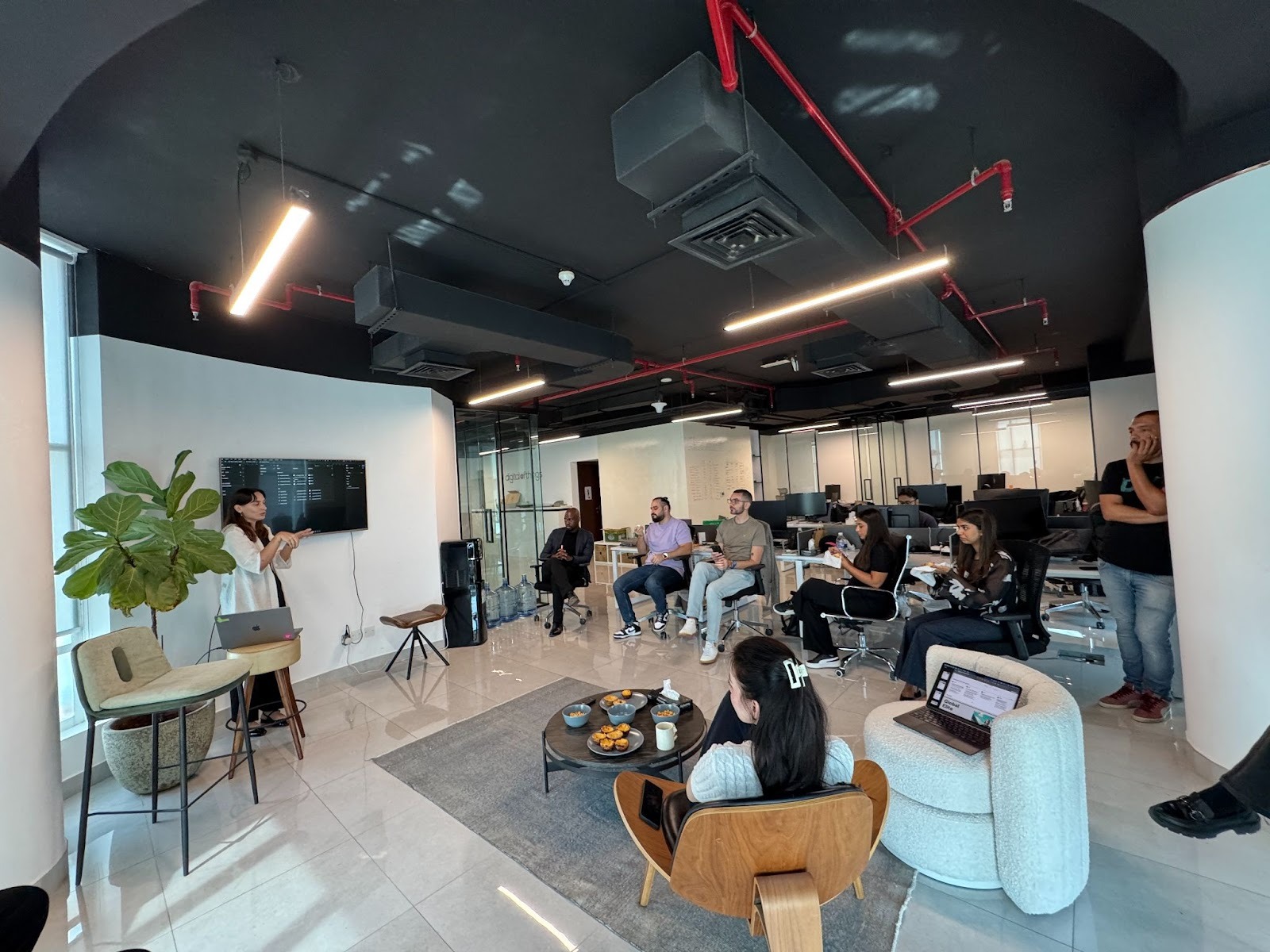
Design quality suffers when people are pushed to move faster without space to think. Margarida’s journey includes periods of pause and recovery that strengthened her practice. We believe sustainable teams produce better work. Curiosity thrives in environments that value discipline, trust, and thoughtful collaboration.
Designing across borders is the norm, not the exception. Products today must work for people with different languages, expectations, and lived experiences. That complexity cannot be solved with templates or shortcuts.
At Digital of Things, we believe the future of UX lies in deeper understanding, not faster execution. In asking better questions before proposing solutions. In designing systems that are resilient, inclusive, and adaptable over time.
Curiosity is not a phase in our process. It is how we future-proof the work we do. By staying close to users, collaborating across disciplines, and designing with intention, we help organisations build experiences that remain relevant as contexts, markets, and technologies continue to evolve.
That is the kind of design we are committed to creating.
 UAE: 1507, The Dome Tower, Cluster N, JLT, Dubai, UAE
© 2026 Digital of Things DMCC. All rights reserved | Privacy policy


